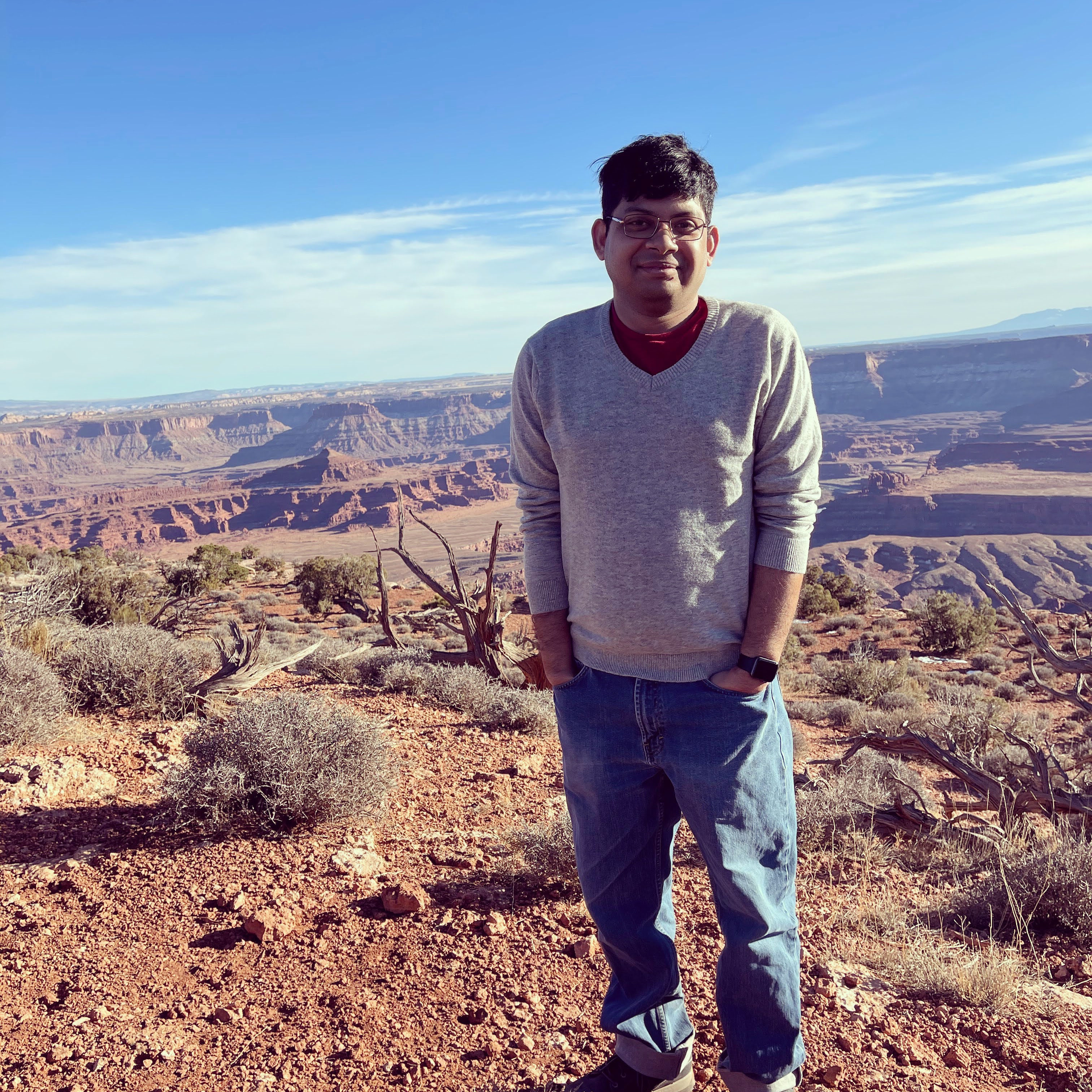
Debajeet Barman
H-Index
?
Citations
?
i10-Index
?
Publications · Global
Debajeet Barman – creating structure from noise

About Me

Debajeet Barman is a geophysicist decoding Earth’s interior through AI-powered seismic imaging and ambient noise tomography. With a Ph.D. from Baylor University, I integrate computational models, field deployments, and open-source tools.

My research spans adjoint-free inversion, machine learning, high-performance computing, and distributed acoustic sensing — combining physics with innovation to uncover the unseen.

I believe science should be transparent, collaborative, and visually engaging. From Python to the Permian Basin, I bridge data and discovery.

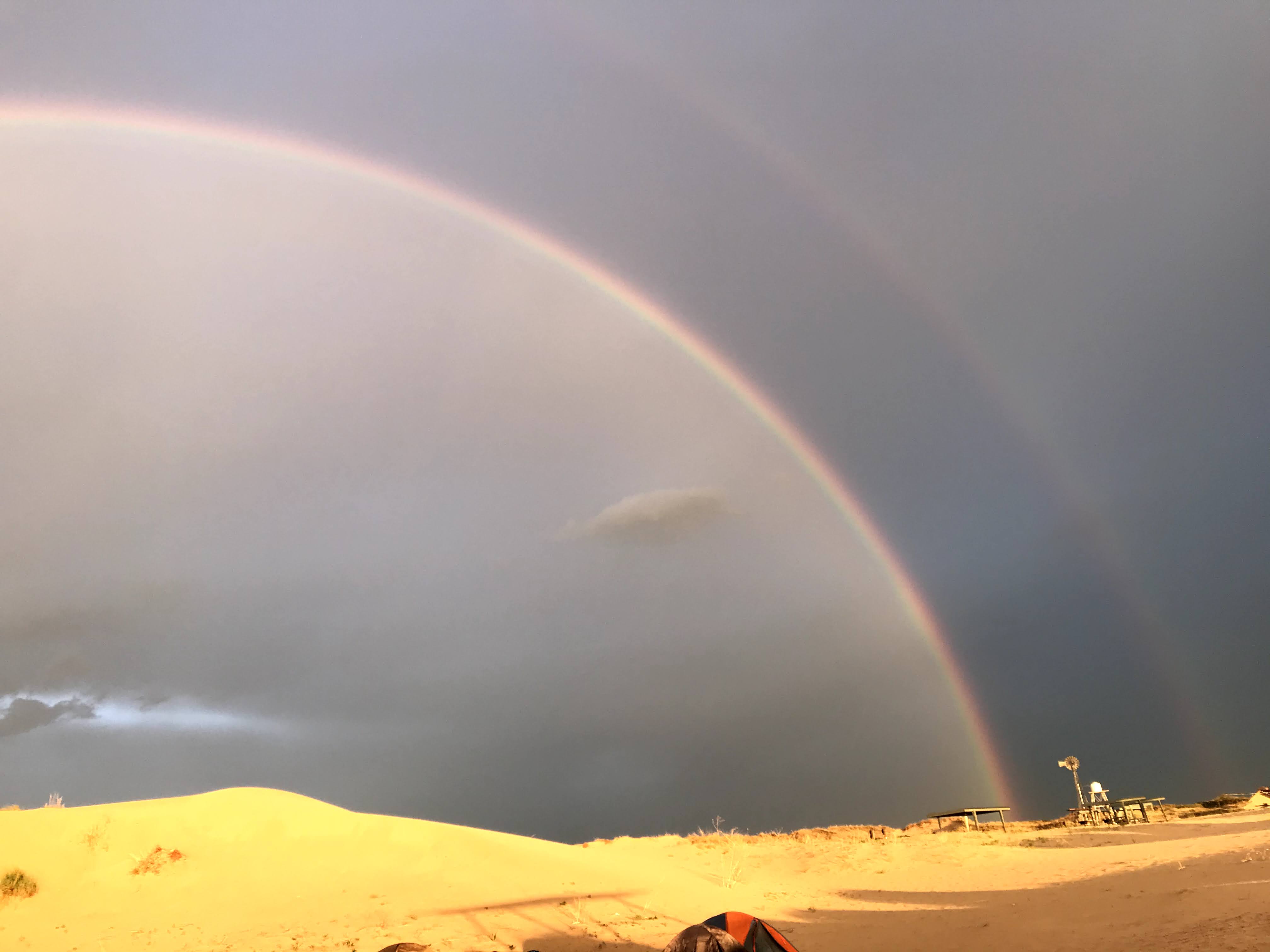
Debajeet in field Debajeet during seismic survey

🎓 Education

Ph.D. in Geophysics
Baylor University

🧠 Expertise

Seismic Imaging
Adjoint-Free Inversion
Ambient Noise Tomography

🛠 Tools

Python, CUDA, MPI
TensorFlow, ObsPy, Fortran

🌍 Field Work

Gulf Coast Surveys
Gravity + DAS Projects
TexNet Collaborations

Projects

A mini slide-deck of how I use noise, physics, and AI to image Earth’s interior.

PASSIVE SEISMIC

Ambient Noise Tomography – Southeastern U.S.

Extracted Rayleigh-wave dispersion from continuous noise records using a MUSIC-based workflow on TensorFlow, suppressing non-coherent arrivals and stabilizing phase-velocity measurements.

Produced high-resolution crustal and upper-mantle structure beneath the southeastern United States, with improved sensitivity to sedimentary basins and Moho topography.

MUSIC TensorFlow Ambient Noise Crustal Imaging
[noise ➜ cross-correlation ➜ dispersion ➜ tomography]
3D noise-derived surface – animated wavefronts hinting at ambient noise cross-correlation.

INVERSE PROBLEMS

Dictionary Learning for Unsupervised Seismic Inversion

Learned sparse dictionaries directly from shot gathers to represent coherent seismic energy while suppressing noise and acquisition footprints.

Used the learned basis as a prior in an adjoint-free inversion scheme, recovering velocity structure without requiring labeled training models.

Dictionary Learning Sparse Coding Unsupervised Adjoint-Free Inversion
ASCII MODEL / DATA GRID
DATA SPACE (shot gathers) +------------------------+ | //// .. //// .. | | //// //// .. //// | | .. //// //// .. | +------------------------+ → Learn atoms Φₖ → Represent data as d ≈ Σ αₖ Φₖ MODEL SPACE (velocity) +------------------------+ | ░░░ ███ ███ ░░░ | | ░░░ ███ ███ ░░░ | +------------------------+
[data ➜ dictionary ➜ sparse coefficients ➜ structure]

DRL-Based Seismic Multiple Suppression

Deep Reinforcement Learning for Multiple Suppression (DRL-AutoMute)

Python/PyTorch environment and DQN agent for adaptive muting of seismic multiples. The environment defines actions as mute-parameter updates (e.g., slope, intercept, taper length), and the reward is computed from residual multiple energy and preservation of primary amplitudes. Developed originally for Shell’s AutoMatch project to demonstrate that DRL can outperform static Bayesian parameter searches for multiple attenuation.

DAS Micro-gravity Joint Inversion Near-surface
ASCII FIBER + ANOMALY MAP
DAS fiber layout +-----------------------------+ | ⟂⟂⟂⟂⟂⟂⟂⟂⟂ fiber in trench | +-----------------------------+ Micro-gravity map +----------------+ | 0 -1 -3 -2 | | 1 -2 -4 -3 | Δg | 0 -1 -2 -1 | +----------------+ Joint objective: Φ = Φ_DAS(m) + λ Φ_g(m)
[fiber strain + Δg ➜ consistent shallow model]
-->

Publications

📝 GitHub README

Contact

✉️ Email
debajeet123@gmail.com
LinkedIn | Google Scholar | ResearchGate | GitHub

🌍 Earthquakes (24h)